Puna


A Ransom for Many - それは何を意味するのでしょうか?

Ni New Christian Bible Study Staff (Isinalin ng machine sa 日本語)

A Ransom for Many - それは何を意味するのでしょうか?

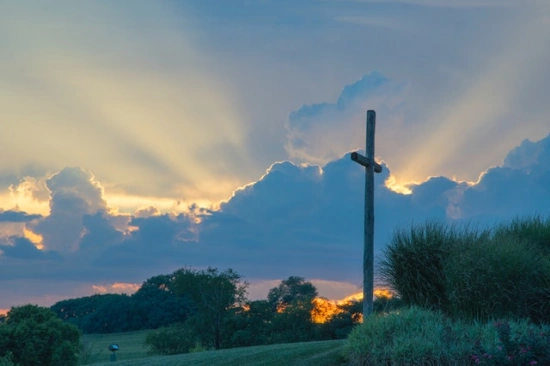
今から約2000年前、ナザレのイエス、イエス・キリストは十字架にかけられました。死にました。苦しみながら。そして、翌々日の朝には死からよみがえりました。彼の肉体は消滅した。というより、その後の出来事を考えると、それは霊的なものに変化したようだ。それ自体、考えると面白いことですが、この記事の焦点ではありません)。

その代わり、ここでは、イエスがなぜ死んだのかについて、聖書で語られているいくつかの事柄に注目したいと思います。それについては、ほぼ2000年前の混乱があります。それを掘り下げてみましょう...。

マルコによる福音書10:42-45 にも)。 マタイによる福音書20:25-28)には、イエスの宣教の後半に起こった、よく知られた教訓が記されています。ヤコブとヨハネは、まだ何が起こっているのかよく理解していなかったので、イエスが「王」になったときに、イエスの左と右に座ることを約束してほしいと陳情していました。もちろん、他の弟子たちは不愉快な思いをしました。イエスはこの状況を知っていたので、彼らを集めて、イエスの使命の本質と、彼らの使命のあり方を説明しようとしたのです。

これがその文章です。

"しかし、イエスは彼らを呼び寄せて言われた。「あなたがたは、異邦人を支配することになっている者たちが、彼らの上に主権を行使し、その偉大な者たちが彼らの上に権威を行使していることを知っている。しかし、あなた方の間ではそうではありません。あなた方の中で偉くなる者は誰でも、あなた方の大臣となります。あなたがたの中で偉くなる者は、あなたがたの大臣となり、あなたがたの中で最も偉くなる者は、すべての者のしもべとなる。人の子といえども、仕えられるためではなく、仕えるために来たのであり、また、自分の命を多くの人のための身代金として捧げるために来たのである。"

身代金です。ここで使われているギリシャ語は、λύτρον(ルトロン)といい、λύω(ルオ)の「緩める」「解く」「自由にする」という意味から、贖罪や身代金を意味しています。

神学者の中には、この文章を、十字架の物語の中で、イエスが苦悩と神の本質からの分離感を示す3つのことを言っている文章と組み合わせた人もいます。「わが神、わが神、なぜ私をお見捨てになったのですか」、「それにしても、私の意志ではなく、御心のままにしてください」、「父よ、彼らをお許しください。

これは確かに、イエスがある種のスケープゴートの役割を果たし、父を失望させた人類の代わりに自分の死を捧げた、一種の犠牲と解釈することができます。そのように解釈した神学者もいます。西暦1000年頃のカンタベリーのアンセルムは、そのような主張をする一派のリーダーの一人でした。しかし、私たちはそれが正しい道だとは思っていません。それどころか、間違った道であったために、かなりの損害を被ったと考えています。

新キリスト教の神学では、神が怒ったというのは意味がありません。神は愛そのものです。私たちが神の愛に応えないと、神はがっかりされますか?しかし、怒ることはありません。特に旧約聖書ではそのように見えることもありますが、神の本質は愛なのです。

さらに言えば、イエスの肉体が死んだからといって、父なる神の気分が良くなるわけではないことは、もっとはっきりしているはずです。二人は一人の人間であり、一心同体であることを忘れてはいけません。

むしろ、神の受肉、宣教、死、復活という一連のサイクルは、新しい真理が人類に到達するために行われたものなのです。

天界の秘義1419,

"主は、愛そのもの、あるいは天上のすべての愛の本質と命であり、人類に主のすべてのものを与えることを望んでおられます。" "このことは、人の子が自分の命を多くの人のための身代金として与えるために来たという主の言葉によって示されています。"

アポカリプスの説明 328:15という説明がありました。

"身代金を取る』という言葉は、人々を偽りから解放し、真理によって改革することを意味します。これは『真理の神エホバよ,わたしを身代金に換えてください』という言葉に示されています」。詩編31:5)

イエス様が死なれた理由の一つは、地獄の力に打ち勝つためでした。イエスは生涯を通して悪霊と戦いました。最も明確に描写されているのは、洗礼を受けた直後、荒野で40日間を過ごされた時です。イエス様の十字架の苦しみは、悪に対する最後の戦いであり、イエス様の復活は、悪に対する最後の勝利でした。

すべての人にとって、悪を克服するためには、誘惑や悪との戦いがあります。私たちが個人的に悪と闘うように、キリストは宇宙規模で悪と闘われました。キリストの死はその闘いの結論でしたが、それは敗北ではなく、勝利でした。聖書によると、神が肉と血を受けたのは、「死によって、死の力を持つ者、すなわち悪魔を滅ぼすためであった」とあります。(ヘブライ人への手紙2:14,15)

聖書がイエスの死の理由として挙げているもう一つの理由は、イエスがご自分の人間としての性質と神としての性質を一つにして、「ご自分の中で、二人で一人の新しい人を造る」ことができるようにするためでした(エフェソの信徒への手紙2:14-16を参照してください。 ヨハネによる福音書17:11, 21; 10:30)。

他にも様々な理由が挙げられます。

父のもとに行く」ことができた(ヨハネによる福音書13:3; 14:2, 28; 16:10)。彼は「栄光」を得ることができました(ヨハネによる福音書17:1,5)や「主の栄光に入る」(ルカによる福音書24:26)。彼は「完成された」ことができた(ルカによる福音書13:32)、または「聖なるもの」(ヨハネによる福音書17:19)。

スウェーデンボルグのでは真のキリスト教86と書かれています。

"エホバ神は、人々を救済する目的で、神の真理としてこの世に現れた。贖いとは、地獄を支配し、天界を再編し、そして教会を設立することだった。"

磔にされた時、悪の勢力は勝ったと思った。当時の宗教的、市民的な権力者たちが主導して彼を非難した。彼はあざけられた。群衆は彼に反発した。

イエス様の肉体の死は、このように「身代り」でした。あの拷問と死を受けることによって、イエス様は自分の霊的な力が自然の死を超えていることを示すことができたのです。イエスは、私たちを地獄の支配から解き放ち、新しい教会、私たちが従うことのできる新しい道を確立されたのです。

Mula sa Mga gawa ni Swedenborg


Apocalypse Explained # 314

Pag-aralan ang Sipi na ito

  
/ 1232  
  

314. A Lamb standing, signifies the Lord in respect to the Divine Human. This is evident from the signification of "lamb," as being, in reference to the Lord, Himself in respect to the Divine Human. The Lord in respect to the Divine Human is called a "lamb" because a "lamb" signifies the good of innocence, and the good of innocence is the good itself of heaven proceeding from the Lord; and so far as angels receive this good, so far they are angels. This good reigns with angels that are in the third or inmost heaven; for this reason those in that heaven appear as infants before the eyes of other angels. (What the good of innocence is, and that the angels of heaven are in that good, see in the work on Heaven and Hell, in the chapter treating of The State of Innocence of the Angels of Heaven, n. 276-283, also n. 285, 288, 341, 382.) It is believed in the world that the Lord is called "a Lamb" for the reason that the continual burnt-offering, or what was offered every day, evening and morning, was from lambs, and especially on the Passover days, when a lamb was also eaten; and that the Lord suffered Himself to be sacrificed. Such a reason for His being so called may do for those in the world who do not think beyond the sense of the letter of the Word; but nothing of this kind is perceived in heaven when the term "lamb" is predicated of the Lord; but when "lamb" is mentioned, or is read in the Word, the angels, because they are all in the spiritual sense of the Word, perceive the good of innocence; and when the Lord is so called, they perceive His Divine Human, and at the same time the good of innocence that is from Him. I know that this will with difficulty be believed, but yet it is true.

[2] That "lamb" in the Word signifies the good of innocence, and in reference to the Lord Himself, "lamb" signifies His Divine Human, can be seen from the following passages. In Isaiah:

Behold, the Lord Jehovih cometh in strength. He shall feed His flock like a shepherd; He shall gather the lambs into His arm, and shall carry them in His bosom, and shall gently lead the sucklings (Isaiah 40:10-11).

This treats of the Lord's coming; the "flock that He shall feed as a shepherd," signify those who are in the good of charity; and the "lambs that He shall gather into His arm," signify those who are in love to Him. It is this love that, viewed in itself, is innocence; therefore all who are in it are in the heaven of innocence, which is the third heaven; and as this love is signified by lambs, it is also said, "He shall gently lead the sucklings." "Sucklings" and "infants" in the Word mean those who are in innocence (See in the work on Heaven and Hell 277, 280, 329-345).

[3] In the same:

The wolf shall sojourn with the lamb, and the leopard shall lie down with the kid, the calf and the young lion and the fatling together, and a little boy shall lead them; and the heifer and the bear shall feed, their young ones shall lie down together; the suckling shall play on the hole of the adder, and the weaned child shall put his hand on the basilisk's den (Isaiah 11:6-8).

These things are said of the Lord's coming and of His kingdom, also of those therein who are in the good of innocence, that they shall have nothing to fear from the hells and the evils therefrom, because they are protected by the Lord. The Lord's kingdom is here described by innocences of various kinds, and by their opposites from which they shall be protected; a "lamb" means innocence of the inmost degree, its opposite is the "wolf;" a "kid" means innocence of the second degree, the opposite of which is the "leopard;" a "calf" means innocence of the last degree, the opposite of which is the "young lion." (That "lamb," "ram," or "sheep," and "calf," signify three degrees of innocence, see Arcana Coelestia 10132.) Innocence of the inmost degree is such as belongs to those who are in the third or inmost heaven, and its good is called celestial good; innocence of the second degree is such as belongs to those who are in the second or middle heaven, and its good is called spiritual good; and innocence of the last degree is such as belongs to those who are in the first or the last heaven, and its good is called spiritual-natural good. (That all who are in the heavens are in some good of innocence, see Arcana Coelestia 4797.) Because the goods of innocence are described by the animals above named, it is said further "and a little boy shall lead them," also, "the suckling shall play on the hole of the adder, and the weaned child shall put forth his hand on the basilisk's den." These degrees of innocence are signified also by "boy," "suckling," and "weaned child." (That "boy" has this signification, see Arcana Coelestia 430, 5236; that "suckling," or infant of the first age, and "weaned child," or infant of the second age, have these significations see n. 3183 4563, 5608, 6740, 6745)

[4] Because a "lamb" signifies innocence, or those who are innocent, and a "wolf" those who are against innocence, it is said in like manner in another place in the same prophet:

The wolf and the lamb shall feed together; they shall not do evil in the whole mountain of holiness (Isaiah 65:25);

"the mountain of holiness" is heaven, especially the inmost heaven. Therefore the Lord said to the seventy whom He sent forth:

I send you forth as lambs in the midst of wolves (Luke 10:3).

[5] Because "lambs" signify those who are in the love to the Lord, which love is one with innocence, and because "sheep" signify those who are in love towards the neighbor, which love is charity, the Lord said to Peter:

Simon, son of Jonas, lovest thou Me? He saith unto Him, Yea, Lord; Thou knowest that I love Thee. He saith unto Him, Feed My lambs; and afterwards, Feed My sheep (John 21:15-17).

These things were said to Peter, because by "Peter" truth from good, or faith from charity was meant, and truth from good teaches; "to feed" meaning to teach.

[6] In Ezekiel:

Arabia and all the princes of Kedar, these were the merchants of thy hand, in lambs, rams, and goats (Ezekiel 27:21).

This is said of Tyre, by which those who are in the knowledges of truth and good are meant. "Arabia" and "the princes of Kedar," who are "the merchants of her hand," signify those who are in truths and goods from knowledges; "merchants" signify those who communicate and teach these; "lambs, rams, and goats," signify three degrees of the good of innocence, the same as "lambs, rams, and calves." (That these signify the three degrees of the good of innocence, see Arcana Coelestia 10042, 10132)

[7] In like manner in Moses:

He made him to ride on the high places of the earth, and fed him with the increase of the fields; he made him to suck honey out of the cliff, and oil out of the flint of the rock; butter of the herd and milk of the flock, with the fat of lambs, of the rams of Bashan, and of goats, with the fat of the kidneys of wheat; and thou drinkest the pure blood of the grape (Deuteronomy 32:13-14).

These things are said of the establishment of the Ancient Church, which was the first church after the flood, and all these things describe its various kinds of good; but as scarcely anyone will understand them without explanation, I will briefly explain them. "To ride on the high places of the earth" signifies that the intelligence of those who were of that church was interior; "He fed him with the increase of the fields" signifies that they were instructed in all truth and good; "He made him to suck honey out of the cliff" signifies that they had natural good by means of truths; "oil out of the flint of the rock" signifies that they had spiritual good also by means of truths; "honey" and "oil" signifying those goods, and "cliff," "rock," and "hard rock," signifying truths; "butter of the herd, and milk of the flock," signify the internal and the external good of truth; "the fat of lambs, of the rams of Bashan, and of goats," signifies the goods of innocence of the three degrees (as above); "the fat of the kidneys of wheat" and "the blood of the grape" signify genuine good and genuine truth therefrom.

[8] In Isaiah:

The sword of Jehovah shall be filled with blood; it shall be made fat with fatness, with the blood of lambs and of he-goats, and with the fat of the kidneys of rams (Isaiah 34:6).

Here, too, "lambs, rams, and goats," signify the three degrees of the good of innocence (of which above); but here their destruction by the falsities of evil is treated of; for "sword" signifies falsity destroying truth and good; the "blood" with which it shall be filled signifies destruction.

[9] Since a "lamb" signifies innocence, which, viewed in itself, is love to the Lord, a "lamb," in the highest sense, signifies the Lord in respect to the Divine Human, for in respect to this, the Lord was innocence itself; as may be seen in the following passages. In Isaiah:

He endured persecution and He was afflicted, yet He opened not His mouth; He is led as a lamb to the slaughter (Isaiah 53:7).

Send ye the lamb of the ruler of the land from the cliff toward the wilderness unto the Mount of the daughter of Zion (Isaiah 16:1).

In John:

John seeth Jesus coming unto him, and saith, Behold the Lamb of God, that taketh away the sin of the world. And afterwards, seeing Jesus walking, he said, Behold the Lamb of God (John 1:29, 36).

And in Revelation:

The Lamb in the midst of the throne shall feed them, and shall lead them unto living fountains of waters (Revelation 7:17).

They overcame by the blood of the Lamb, and by the Word of the testimony (Revelation 12:11;

besides also elsewhere in Revelation (as Revelation 13:8; 14:1, 4; 17:14; 19:7, 9; 21:22-23; 22:1, 3).

[10] Since "burnt-offerings and sacrifices" signified all representative worship from the good of love and from the truths thence, "burnt-offerings" worship from the good of love, and "sacrifices" in a special sense worship from the truths thence, so:

Every day, evening and morning, there was a burnt-offering of lambs (Exodus 29:38-43; Numbers 28:1-9);

Every sabbath, of two lambs, besides the continual burnt-offering of them (Numbers 28:9-10);

In the beginnings of the months, of seven lambs (Numbers 28:11-15);

Likewise on the day of the firstfruits (Numbers 28:26 to end);

Likewise in the seventh month, when there was a holy convocation (Numbers 29:1-7);

Likewise, namely of seven lambs on each day of the passover, besides two young bullocks, one ram, and one goat (Numbers 28:16-24).

The burnt-offering was of "seven lambs" because "seven" signifies all and fullness, and it is predicated of what is holy, and because "burnt-offerings" in general signified worship of the Lord from the good of love, and the good of love to the Lord from the Lord is the good itself of innocence; and "lamb" in the highest sense signified the Lord in respect to the Divine Human. (That "burnt-offerings" signified all worship from the good of love to the Lord from the Lord, see Arcana Coelestia 923, 6905, 8680, 8936, 10042) On account of this representation there was also instituted:

The supper of the passover of lambs or kids (Exodus 12:1-29);

for "the feast of the passover" represented the glorification of the Lord's Human (See Arcana Coelestia 10655). Because "infants" signified innocence, it was also commanded that:

After birth, on the day of purification, they should sacrifice a lamb, a young pigeon, or a turtle dove; or, instead of a lamb, two young pigeons or two turtle doves (Leviticus 12:6, 8);

"young pigeons" and "turtle doves" signifying the like as "lambs," namely, innocence.

  
/ 1232  
  

Thanks to the Swedenborg Foundation for their permission to use this translation.

Mula sa Mga gawa ni Swedenborg


Apocalypse Explained # 253

Pag-aralan ang Sipi na ito

  
/ 1232  
  

253. Verse 21. He that overcometh, I will give to him to sit with Me in My throne, signifies that he who is steadfast to the end of life shall be conjoined with heaven where the Lord is. This is evident from the signification of "overcoming," as being to be steadfast in the spiritual affection of truth even to the end of life (See above, n. 128); but here it means to be steadfast in a state of faith from charity, since charity is here treated of. This is what "overcoming" means; because so long as man lives in the world he is in combat against the evils and the falsities therefrom that are with him; and he who is in combat, and is steadfast in the faith of charity even to the end of life, overcomes; and he who overcomes in the world overcomes to eternity, since man after death is such as his life had been in the world. This is evident also from the signification of "to sit with Me in My throne," as being to be conjoined with heaven where the Lord is; for "throne" signifies heaven, and to "sit with Me" signifies to be together with the Lord, thus conjoined to Him.

[2] In the Word the word "throne" is many times used, and in reference to the Lord it signifies in general, heaven, in particular the spiritual heaven, and in the abstract, Divine truth proceeding from the Lord, since this is what makes heaven. For this reason "throne" is also predicated of judgment, since all judgment is effected from truths. That such is the signification of "throne" in the Word can be seen from the following passages. In Isaiah:

Jehovah said, The heavens are My throne (Isaiah 66:1).

In David:

Jehovah hath established His throne in the heavens (Psalms 103:19).

And in Matthew:

He that sweareth by heaven sweareth by the throne of God and by Him that sitteth thereon (Matthew 23:22).

It is clear that "throne" in these passages signifies heaven; for it is said that "the heavens are His throne," that "He hath established His throne in the heavens," and that "he who sweareth by heaven sweareth by the throne of God;" not because Jehovah or the Lord there sits upon a throne, but because His Divine in the heavens is called "throne:" and also appears at times as a throne to those to whom it is given to look into heaven. That the Lord was thus seen is evident in Isaiah:

I saw the Lord sitting upon a throne high and lifted up, and His train filling the temple (Isaiah 6:1).

"His train filling the temple" signifies that Divine truth proceeding filled the ultimate of heaven and the church, for the "Lord's train" signifies in general Divine truth proceeding, and in particular Divine truth in the extremities of heaven and in the church (See above, n. 220).

[3] In Ezekiel:

Above the expanse that was over the head [of the cherubim] there was as the appearance of a sapphire stone, the likeness of a throne, and upon the likeness of the throne was a likeness as the appearance of a man upon it above (Ezekiel 1:26; 10:1).

The "throne" had an appearance like a sapphire stone, because "sapphire" signified Divine truth proceeding from the Lord's Divine good, and therefore spiritual truth pellucid from celestial good (See Arcana Coelestia 9407, 9873); thus "throne" here signifies the whole heaven, for heaven is heaven from Divine truth. (What "cherub" signifies, see Arcana Coelestia 9277, 9509, 9673.)

[4] In Revelation:

Behold, a throne set in heaven, and upon the throne One sitting. A rainbow round about the throne, in aspect like an emerald. And out of the throne went forth lightnings and thunders and voices. Before the throne a glassy sea like unto crystal; and round about the throne four animals, full of eyes before and behind (Revelation 4:2-6, 9-10).

That heaven in respect to Divine truths is here described will be seen in the explanation of these words in the following chapter. There is a like meaning in the following from Revelation:

A pure river and bright as crystal went forth out of the throne of God and of the Lamb (Revelation 22:1).

"A pure river and bright as crystal" was seen "going forth out of the throne," because a "river" as well as "crystal" signifies Divine truth.

[5] "The throne of David" in the Word has a like meaning; since by "David" in the prophetic Word is meant, not David, but the Lord in respect to royalty, which is Divine truth in the spiritual heaven, which is the second heaven. So in Luke:

The angel said to Mary, He shall be great, and shall be called the Son of the Most High, and the Lord shall give unto Him the throne of His father David (Luke 1:32).

And in Isaiah:

Unto us a child is born, unto as a Son is given, and the government shall be upon His shoulder, and His name shall be called Wonderful, Counselor, God, Hero, Father of Eternity, Prince of Peace. Of the multiplication of His government and peace there shall be no end; upon the throne of David, and upon His kingdom, to establish it in judgment and in righteousness, from henceforth and even to eternity (Isaiah 9:6-7).

It is clear that here is not meant David, and his throne, on which the Lord was to sit; for the Lord's kingdom was not on earth but in heaven; by "the throne of David," therefore, heaven in respect to Divine truth is meant (See above, n. 205). The meaning is similar in the Psalm of David, where the Lord speaks of His throne and His kingdom; as in the whole of Psalms 89, in which are also these words:

I have sworn unto David My servant: Thy seed will I establish for ever; and thy throne to generation and generation. Judgment and righteousness are the foundation of thy throne; I will establish his throne as the days of the heavens (Psalms 89:3-4, 14, 29).

That the Lord is here meant by David, see above n. 205). The like is signified by "the throne of glory" where the Lord is spoken of, for "glory" signifies Divine truth.

As in Matthew:

When the Son of man shall come in His glory, and all the holy angels with Him, then shall He sit on the throne of His glory (Matthew 25:31).

(That "glory" signifies Divine truth in heaven, see Arcana Coelestia 4809, 5922, 8267, 8427, 9429; and above, n. 33.)

This shows what is signified by "the throne of glory" in Jeremiah:

Do not disgrace the throne of thy glory (Jeremiah 14:21; 17:12);

which signifies that Divine truth should not be disgraced. The like is signified by Jerusalem being called "the throne of Jehovah;" for "Jerusalem" signifies the church in respect to doctrine; and doctrine is Divine truth.

From this it is clear how these words are to be understood in Jeremiah:

At that time they shall call Jerusalem the throne of Jehovah, and all the nations shall be gathered unto it (Jeremiah 3:17).

In David:

Jerusalem is builded; thither the tribes go up; and there are set thrones for judgment, the thrones of the house of David (Psalms 122:3-5).

In Ezekiel:

The glory of Jehovah came into the house by the way of the gate whose face was toward the east. And He said unto me, Son of man, behold the place of My throne, and the place of the soles of My feet, where I will dwell in the midst of the sons of Israel for ever (Ezekiel 43:4, 7).

(That "Jerusalem" signifies the church in respect to doctrine, thus Divine truth in the heavens and on the earth, for this makes the church, see Arcana Coelestia 3654, 9166; and above, n. 223) As all judgment is effected by truths, and judgment in the heavens by Divine truth, "throne" is also mentioned where the Lord in respect to judgment is treated of, as above (Matthew 25:31; and in David, Psalms 122:3-5).

Again, in David:

Jehovah, Thou hast executed my judgment; thou sattest on the throne a judge of justice; thou hast rebuked the nations, thou hast destroyed the wicked; Jehovah shall sit for ever; He will prepare His throne for judgment (Psalms 9:4-5, 7).

[6] It is also said in many places in the Word, not only that the Lord is to sit on a throne, but that others also shall sit upon thrones, but still these "thrones" do not mean thrones, but Divine truths. Thus in the first book of Samuel:

He raiseth up the poor out of the dust, and lifteth on high the needy from the dunghill, to make them sit with princes, and to make them inherit the throne of glory (1 Samuel 2:8).

In Revelation:

The four and twenty elders who are before the throne of God, sitting upon their thrones (Revelation 11:16).

Again:

I saw thrones, and they sat upon them, and judgment was given unto them (Revelation 20:4).

In Matthew:

Ye who have followed Me in the regeneration, when the Son of man shall sit upon the throne of His glory, ye also shall sit upon thrones, judging the twelve tribes of Israel (Matthew 19:28; Luke 22:30).

Here "thrones" mean Divine truths, according to which and from which all are to be judged; "twelve" and "twenty-four" signify all things and are predicated of truths; "elders," and "disciples" also, likewise "tribes," signify Divine truths. When this is known, what is meant by "thrones" in the above passages can be seen; as also what is meant by "throne" in these words now treated of. "He that overcometh will I give to him to sit with Me in My throne."

(That "twelve" signifies all, and that it is predicated of truths, see Arcana Coelestia 577, 2089, 2129, 2130, 3272, 3858, 3913; likewise "twenty-four" because that number is the double of the number twelve, and arises from it by multiplication, n. 5921, 5335, 5708, 7973.

That "the elders of Israel" signify all in the church who are in truths from good, n. 6524, 6525, 6890, 7912, 8578, 8585, 9376, 9404;

likewise "the Lord's twelve disciples," n. 2129, 3354, 3488, 3858, 6397;

likewise "the twelve tribes," n. 3858, 3926, 4060, 6335, 7836, 7891)

[7] From this it can be seen what was represented by the throne built by Solomon, thus described in the first book of Kings:

Solomon made a great ebony 1 throne, and overlaid it with pure gold. There were six steps to the throne; the head of the throne was round; and behind it were hands on either side near the place of the seat, and two lions standing near the hands; and there were twelve lions standing upon the six steps on the one side and on the other; there was not the like made in any kingdom (1 Kings 10:18-20).

Here "ebony" 1 signifies Divine truth in ultimates; "the head being round," the corresponding good; "the gold with which it was overlaid" Divine good from which is Divine truth. "The six steps" signify all things from first to last; "the two hands" all power; "lions," the truths of the church in their power; "twelve," all things. As "throne," in reference to the Lord, signifies heaven in respect to all Divine truth, so in a contrary sense it signifies hell in respect to all falsity. (In this contrary sense "throne" is mentioned Revelation 2:13; Isaiah 14:9, 13; 47:1; Haggai 2:22; Daniel 7:9; Luke 1:52)

Mga talababa:

1. The Latin has "ebony"; the Hebrew is "ivory."

  
/ 1232  
  

Thanks to the Swedenborg Foundation for their permission to use this translation.